CCR Basin Closure – Wilmington, NC
Project Scope Highlights
• Basin Decommissioning Including Removal of the State Regulated Dams
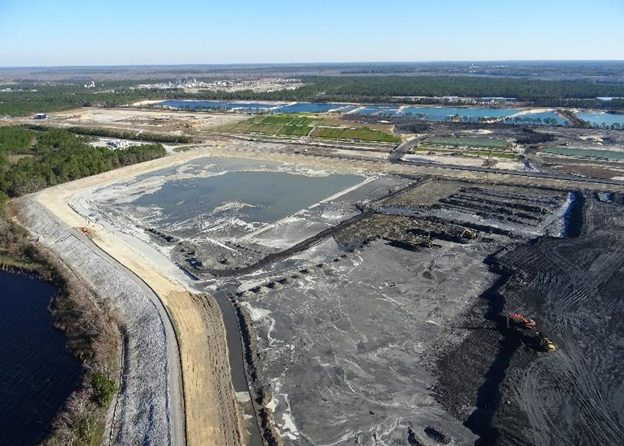
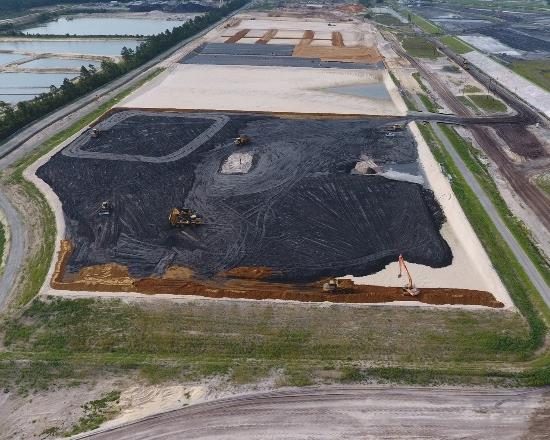
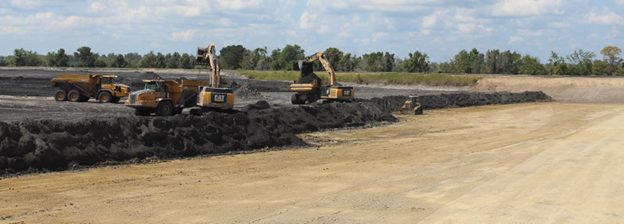
• Excavation, Hauling and Placing of 4M Cubic Yards of CCR Material
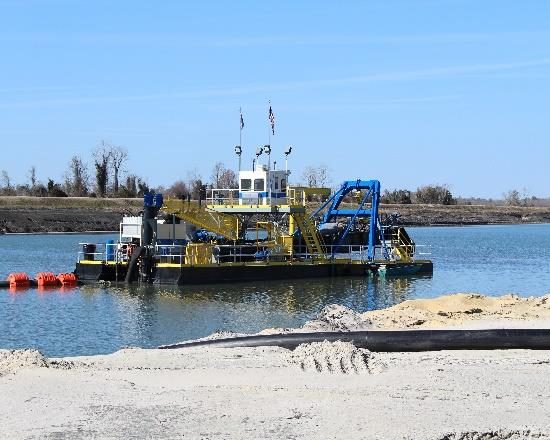
• Hydraulic Dredging and Dewatering of 1.3M Cubic Yards of CCR Material Below the Water Table
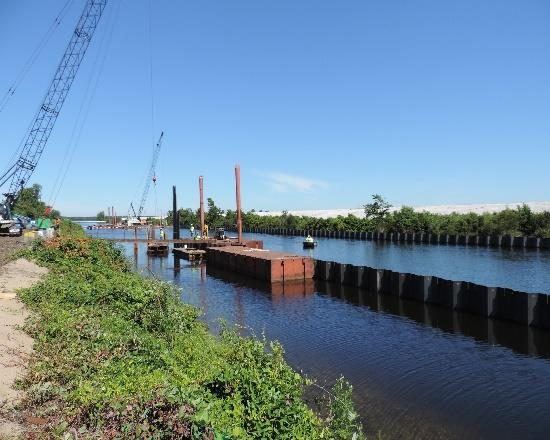
• Landfill Operation• Installation of 4,300 LF of Sheet Pile Wall in the Discharge Canal
• Leachate Monitoring• Decommissioning Outfall Structures
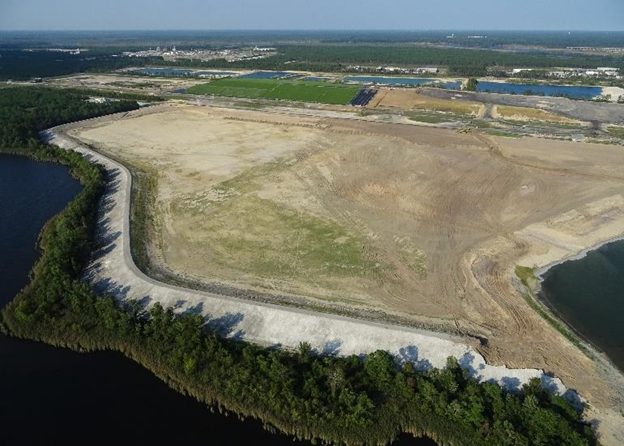
• Landfill Cap and Close with SyntheticTurf60’ Deep Excavation with Dredge
The purpose of this project was to clean close two CCR basins in response to a state-mandated order. The work consisted of removal of the CCRs from the basins, placement of the CCRs in an onsite landfill, decommissioning of the basins and closure of the landfill. To accomplish the goal of meeting the mandated finish dates, a large volume of CCRs had to be moved in a short period of time while maintaining environmental compliance under the watchful eye of state regulators and environmental groups. The tight schedule and environmental factors created a unique set of challenges for this project:
• One of the two basins had a large quantity of CCRs below the water table (up to 60’ below) while the other was a lined basin that held water and could not be impacted. The excavation of the basins was managed through the utilization of mechanical and hydraulic methods, both guided by GPS. This approach allowed us to cut to grade 60’ below the surface as well as remove all CCRs without compromising the liner system of the basin
• The coastal climate of the area included frequent heavy rain sand an unexpected Category 1 Hurricane with a 1,000-year rain event. This challenged both the physical work onsite as well as the schedule. To mitigate these impacts, contingency time was built into the schedule, extra hours were scheduled, and the operation was scaled up to recover from significant storms
• The scale of this excavation was new to the customer and they wished to hold the project to a higher level of safety than prior projects. Trans Ash worked with the customer to develop an excavation plan that included setbacks and safe work practices. This plan incorporated both engineering analysis and Trans Ash’s historical experience, resulting in a plan that improved the safety of this project as well as other excavations throughout the customer’s system.
• In order to accelerate the project, filling of the landfill began as soon as the first cell was available. This limited the available footprint for placement and thus the volume of material that could be moved per day. To mitigate this and work as efficiently as possible, Trans Ash ensured that the CCR material was within the optimum moisture range and engaged in a cosponsored traffic control and communication plan with the existing contractor. As more cells became available, Trans Ash was able to scale up our operation, ultimately reaching a peak of 26,000 tons hauled in a single day.
• The soils available for temporary cover were primarily sand and would not sustain vegetation with traditional seed and mulch mixes. Through a trial and error process, Trans Ash developed a seed and mulch specification that would sustain vegetation. In addition, Trans Ash’s construction plan expedited the landfill closure process which utilized synthetic turf to permanently close the landfill.
• The Category 1 Hurricane and subsequent 1,000-year storm event resulted in the city of Wilmington being shut down and significant impact to the job, including massive erosions. Trans Ash enacted an emergency action plan that included an emergency response team helicoptered into the site to respond